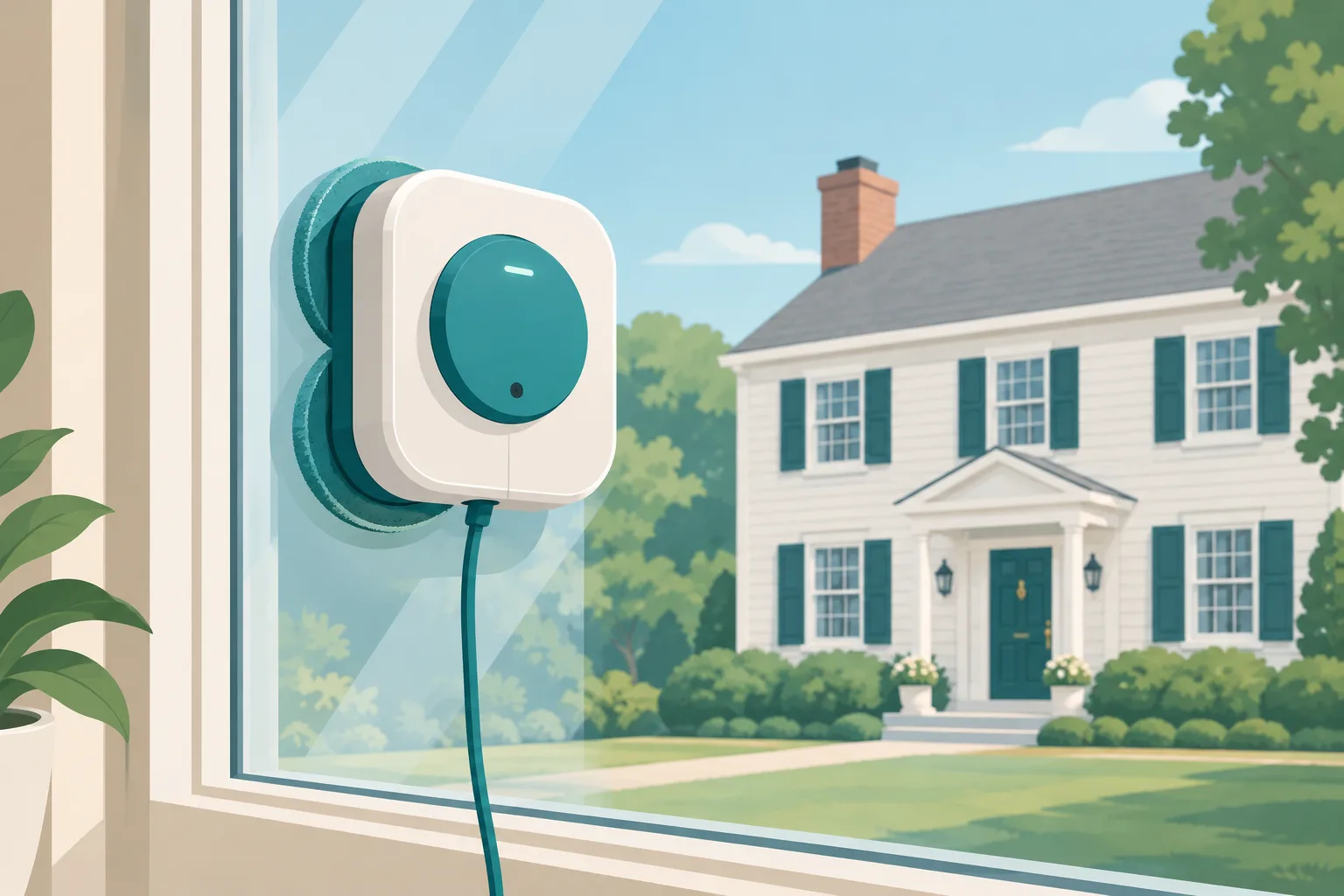
Window cleaner robots can handle basic glass maintenance on flat, modern windows, but they struggle with the older sash windows, storm windows, and divided-light panes common in Belmont and across towns like Arlington, Lexington, and Cambridge. They work best as a supplement to professional cleaning, not a full replacement. Understanding what these devices can and cannot do will save you time, money, and frustration.
How Window Cleaning Robots Actually Work
These small devices use suction to grip the glass. They move in a programmed pattern and scrub with a microfiber pad. Most models connect to your phone and run on battery or a tethered cable for safety. They sound impressive, but the technology has real limits that matter in our region.
- They need a flat, uninterrupted glass surface to move safely.
- Most units cannot cross window frame edges or muntins.
- They do not rinse, so streaks are common without a finishing wipe.
- Cold New England temperatures can affect suction and battery life.
Why Older Homes in Belmont and Nearby Towns Are a Challenge
Belmont has a large stock of colonial, Victorian, and craftsman-style homes. Many of these have double-hung windows, true divided lights, and wood frames. Robots often get stuck on these surfaces. The same issue applies in Arlington, Cambridge, and Somerville, where older triple-deckers and historic homes are common. Exterior window robots also need a smooth, consistent surface to hold suction. Textured glass, old glazing putty, or chipped paint can cause a unit to lose grip and fall.
Newer construction in areas like Waltham or Lexington may be more robot-friendly because those homes often have larger, single-pane picture windows or modern casements with smooth frames. If your home was built after 2000 and has standard double-pane windows, a robot has a better chance of doing useful work.
What the Robot Does Well
To be fair, these devices do have genuine uses for some homeowners.
- They can maintain interior windows between deep cleanings.
- They are useful for large, flat glass surfaces like sliding door panels.
- They reduce how often you need to climb a ladder for low-risk interior glass.
- They are a reasonable option for people with mobility concerns who cannot reach high windows safely.
Think of the robot as a maintenance tool, not a cleaning solution. It keeps glass from getting too dirty between professional visits.
Where Robots Fall Short and Professionals Pick Up the Slack
Robots cannot clean window tracks, sills, or frames. They leave soap residue if you do not wipe the glass by hand afterward. They cannot reach exterior second-floor or third-floor windows safely on most homes. They also miss the corners where dirt and grime collect most. A professional window cleaning service covers all of this. Tracks, sills, screens, and exterior glass are all part of a thorough job. For homeowners in Belmont, Winchester, or Medford, a professional visit a couple of times a year keeps everything in good shape while the robot handles simple touch-ups in between.
Combining Robots With a Regular Cleaning Routine
The smartest approach is to use both tools for what they do best. Let the robot do light maintenance on your interior flat glass. Schedule professional cleaning for the full job, inside and out. Pairing window cleaning with a recurring service plan keeps your whole home consistently clean without the guesswork. Many families in our area find that a seasonal deep clean followed by regular upkeep visits is the most practical schedule. Towns like Watertown, Stoneham, and Melrose all deal with the same pollen in spring and road salt grime in winter that makes regular window attention worthwhile.
Tips Before You Buy a Window Cleaning Robot
If you are still interested in purchasing one, here are practical things to check first.
- Measure your largest windows. Most robots top out around 47 inches per side.
- Check if your windows have divided lights or muntins. If yes, the robot will not cross them.
- Look for models with a safety cord. This catches the unit if suction fails.
- Read the manual on operating temperatures. Many units are not rated for use below 41 degrees Fahrenheit.
- Plan to hand-wipe after each robot cycle to avoid streaks.
Questions Homeowners Ask
Can a window robot clean the outside of second-floor windows?
Most consumer models are not safe for exterior use above the first floor. The risk of the unit falling increases on higher floors, and most warranties do not cover outdoor use on upper levels. A professional service is the safer and more thorough option for high exterior glass.
Will a robot scratch my old wavy glass windows?
Antique wavy glass found in many older Belmont and Cambridge homes is more delicate than modern glass. A robot scrubbing with a microfiber pad should not scratch, but the suction cup could leave marks on fragile surfaces. Hand cleaning is always the safer choice for historic glass.
How often should I still schedule professional window cleaning if I use a robot?
Even with a robot doing touch-ups, most homes benefit from professional cleaning once or twice a year. Spring and fall are popular times in our area because of pollen buildup and winter salt film.
Does Alliance Family Cleaning clean window tracks and sills too?
Yes. A full window cleaning visit covers the glass, tracks, sills, and frames. Robots cannot reach these areas, which is one reason professional cleaning remains a practical part of home care.
If you live in Belmont or any of our nearby service areas and want clean windows without the guesswork, get a free quote from Alliance Family Cleaning today. Our team is ready to help with your window cleaning needs.