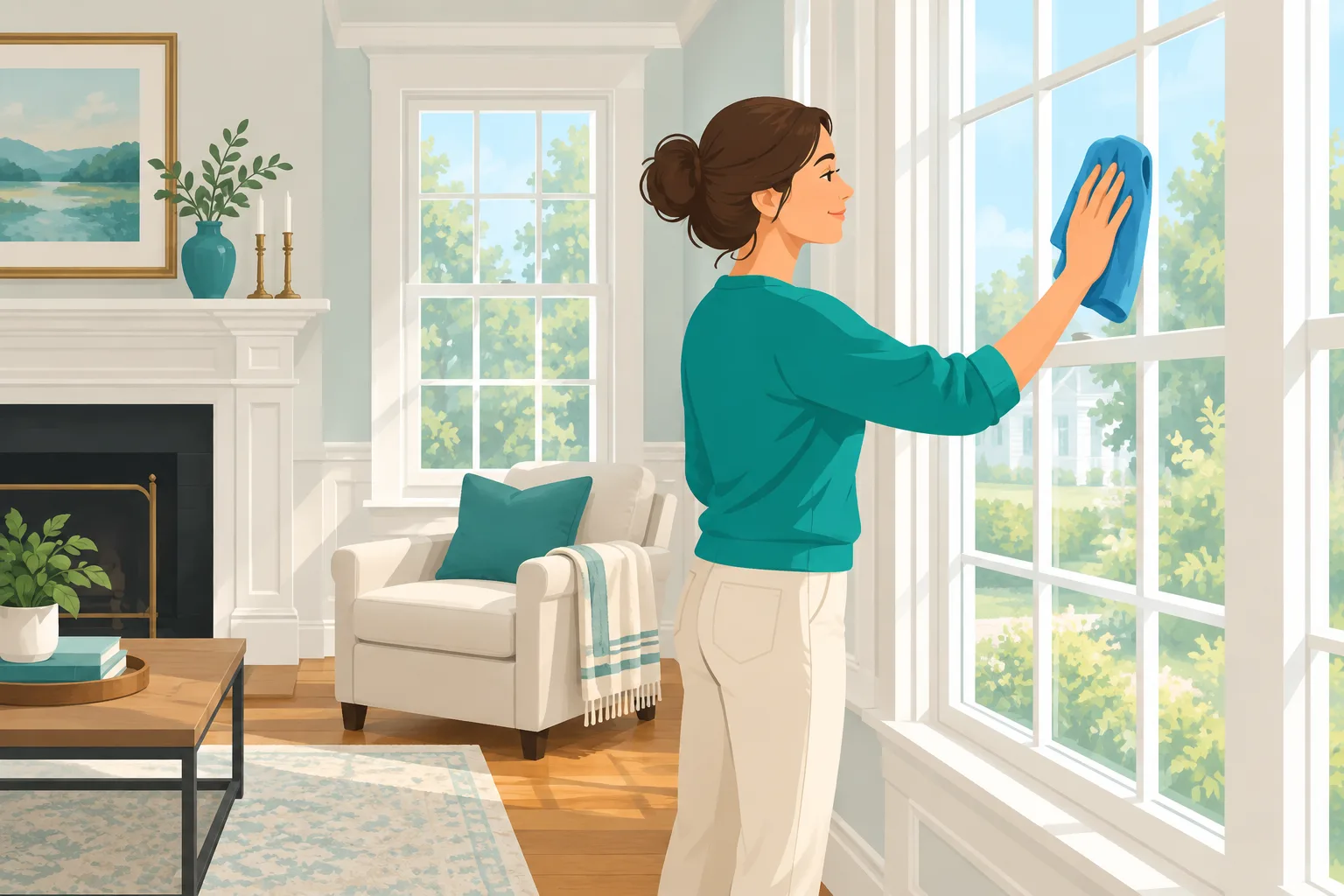
Microfiber cloths are the best tool for cleaning windows in most homes. They lift dirt and grime without leaving streaks, and they work well on both old and new window styles. If you live in Arlington or a nearby town, understanding how to use them correctly can save you time and give you cleaner results.
Why Microfiber Works Better Than Paper Towels
Paper towels leave lint behind. Regular cotton rags push dirt around. Microfiber cloths are different. Their tiny fibers grab and hold particles instead of spreading them. This matters a lot in older homes, where windows may have built-up grime from years of use. Many homes in Arlington, Belmont, and Cambridge were built decades ago. Their windows often have more layers of dust, pollen, and film than newer construction. Microfiber handles all of that without scratching the glass.
Choosing the Right Microfiber Cloth for Windows
Not all microfiber cloths are the same. For windows, you want a cloth with a high GSM rating. GSM stands for grams per square meter. A higher number means a denser, more absorbent cloth. For window cleaning, aim for 300 GSM or higher. You also want a cloth that is at least 16 by 16 inches. Smaller cloths make the job harder. Look for these features when shopping:
- High GSM (300 or above): Better absorption and less streaking
- Waffle weave or flat weave: Both work, but waffle weave is great for heavy grime
- No cheap stitching at the edges: Poor edges can scratch window frames
- Color coding: Use one color for windows only, so the cloth never touches floors or bathrooms
Homeowners in Lexington and Winchester often have large colonial-style windows with wide glass panes. A larger cloth covers more surface area and speeds up the job on those bigger windows.
The Right Technique for Streak-Free Windows
Using a good cloth is only part of the process. Technique matters just as much. Follow these steps for the best results:
- Start dry: Wipe the window first with a dry microfiber cloth to remove loose dust and cobwebs
- Spray lightly: Apply your cleaning solution to the cloth, not directly to the glass. Too much liquid causes drips and streaks.
- Use an S-pattern: Wipe from top to bottom in an S-shape. This keeps dirty water from dropping onto areas you already cleaned.
- Finish with a dry cloth: Buff the glass with a second dry microfiber cloth to remove any remaining moisture
- Clean on a cloudy day: Direct sunlight dries the solution too fast and causes streaks. This is useful to know if you are cleaning during a bright New England summer afternoon.
This method works on interior windows in condos in Somerville and Medford, and also on the larger exterior windows common in single-family homes in Waltham and Woburn.
How to Wash and Care for Your Microfiber Cloths
Microfiber cloths last a long time if you care for them properly. Wash them after every use. Dirty cloths spread grime instead of removing it. Follow these care tips:
- Wash in warm water, not hot. Hot water damages the fibers over time.
- Use a small amount of plain detergent. Avoid fabric softener. Softener coats the fibers and ruins their ability to grab dirt.
- Do not dry on high heat. Air dry or use a low heat setting.
- Never wash microfiber with cotton towels or lint-producing fabrics. Lint sticks to the fibers.
A well-cared-for microfiber cloth can last hundreds of washes. That makes them a smart investment for homeowners in Stoneham, Melrose, and Watertown who clean their windows regularly through the year.
When to Call a Professional Window Cleaner
Microfiber cloths are great for routine interior cleaning. But some windows need more than a cloth. If your windows have hard water stains, mineral deposits, or paint overspray, a professional cleaning may be the better choice. Exterior windows on second and third floors also carry safety risks. Leaning out of a window or climbing a ladder can cause falls. For those situations, professional window cleaning is the safer option. Alliance Family Cleaning serves homeowners throughout Arlington and surrounding communities, including those with multi-story homes that need careful exterior window work.
Questions Homeowners Ask
Can I use the same microfiber cloth for windows and counters?
It is better to keep separate cloths for each surface. Cloths used on counters or floors can carry grease and bacteria that will smear onto your windows. Color coding your cloths by task is a simple way to stay organized.
What cleaning solution works best with microfiber on windows?
A mix of water and a small amount of dish soap works well for most windows. White vinegar diluted in water is another common choice. Avoid ammonia-based cleaners, which can leave a haze on some glass surfaces over time.
How often should I clean my windows with microfiber cloths?
For most homes in the Arlington area, cleaning interior windows every one to two months keeps them looking clear. Exterior windows may need attention after pollen season in spring and again before winter sets in.
Does microfiber work on storm windows and double-pane glass?
Yes, microfiber is safe for both storm windows and double-pane glass. Just make sure the cloth is clean before you start, and avoid pressing hard on any cracked or damaged seals around double-pane units.
If you would rather leave the windows to the professionals, Alliance Family Cleaning is ready to help. We serve homeowners across Arlington and the surrounding area. Get a free quote today and ask about our window cleaning service for your home.